

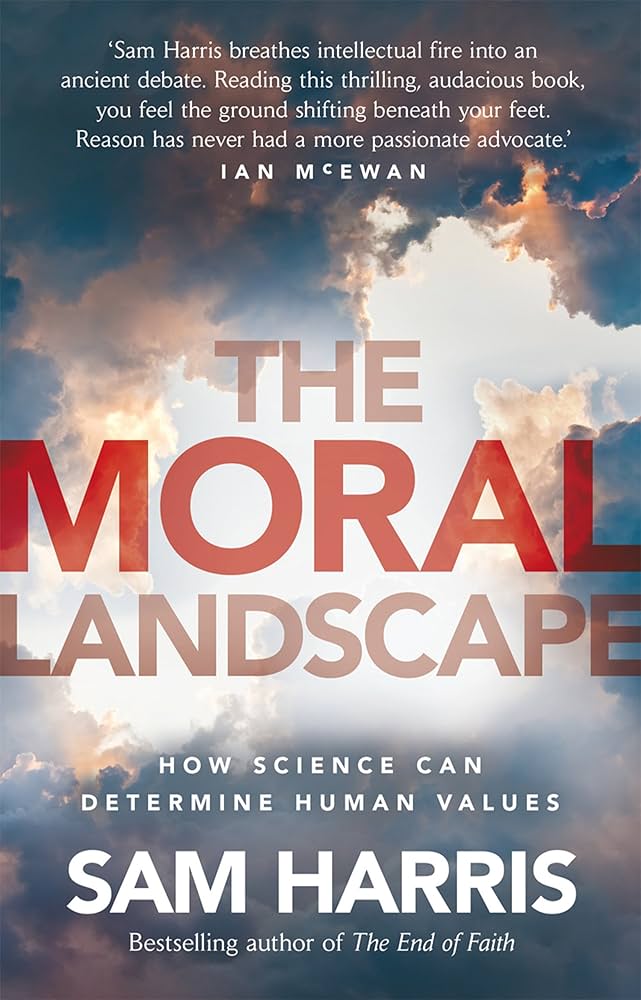
“The Moral Landscape: How Science Can Determine Human Values” by Sam Harris argues that science and reason can provide answers to moral questions, challenging the view that morality is solely the domain of religion or philosophy. Harris posits that moral values are rooted in the well-being of conscious creatures and that science can help us understand and promote well-being. He advocates for a scientific approach to ethics, suggesting that objective truths about human flourishing exist and can be discovered through empirical investigation.
Key Themes and Concepts:
- Moral Realism: Harris argues that there are objective moral truths that can be understood through science.
- Well-Being: He defines well-being as the basis for morality and posits that actions can be judged by their impact on the well-being of conscious beings.
- Science and Ethics: Harris believes that science can and should play a role in determining moral values and guiding ethical behavior.
- Critique of Moral Relativism: He critiques the idea that moral truths are subjective or culturally relative, advocating for universal moral standards based on well-being.
📖 Enjoying the Preview?
You’re currently viewing the first 20 pages of this book. If you’d like to read the full version, you can purchase it using the link below.
💡 Buying through our link not only supports the incredible authors behind this work, but also helps sustain and grow The Global Humanist Repository—a space dedicated to preserving and promoting humanist content worldwide.
👇 Get the full book here:






 English
  Français
  Deutsch
  Español
  Italiano